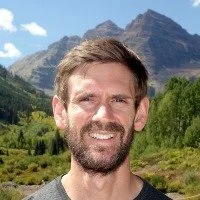
Mike G: From Scrapping for a Football Scholarship to Doing the Dirty Work as an Intern to Training Jrue Holiday & NBA All-Stars
Phil White 00:05
well just in case in case it believes us extensively those that there we are recording the recording in progress Gaudium progress good signs. Okay, so 321 and we alive
Tim DiFrancesco 00:22
Mike, how does an undersized wide receiver in high school earn a scholarship to play D one football get close to the NFL and then become drew holidays? Strength Coach and Trainer to many NBA stars. How does that happen?
Mike G 00:39
Well, number one, let me just give you a small correction. I played division two football, so
Tim DiFrancesco 00:44
Okay, there you go. You got a scholarship though. You played scholarship football?
Mike G 00:49
Yeah. And that that's important because it lends itself into why I am the person I am today. You know, every kid that's that's a serious athlete that loves their sport wants to play division one. And I was no different. I even went the junior college route because I didn't get any looks at a high school. Couple D threes. But you know, hey, I'm my G I'm better than that. I can play division one football play. Played at the JC level started all the all my career there two years, didn't lead the team and receiving but had a really good, you know, freshman and sophomore campaign and still no division one offer. So I kind of took that as a sign as you know what, let me let me just continue my college career. But what this is doing is this calcine My mental process, you know what I mean? Like, continuously getting told no or getting judged. But by the by the eye test. If everybody knows what the eye test is, is I don't pass it at all. I'm five foot eight. I'm a Korean Mexican wire receiver slash corner. American football doesn't lend itself well to two agents at all. That's why I'm behind Ward who was half Korean half black is my favorite football player of all time, just because I had that, that ethnic connection. But just the journey, right? Like everything has to be passionate and driven from a space of why. And, you know, the type of person I am the type of man that my father raised is is someone that perseveres, and you know, you were a chip on your shoulder, because this is just the cards you've been dealt, and you got to figure it out. That's like, one of my favorite phrases is figure it out. You got to problem figure it out. We don't complain about it. We don't cry about it, we figure it out. And maybe you know what I mean? And we got to make some shirts for that. You mean so? Yes. But we we were able to get a division two scholarship. Yes, we were and had a great career at Ferris State University. LED led my team and receiving yards both years. And of course, you know, NFL I'm there like, this is this is the moment this is what everybody has been talking about and waiting for. So guess what? No, no invites any workouts? No, Pro Day, no nothing. And, you know, I'm starting to feel discouraged about it. But I have one more opportunity. It's called a free agent combine. It's not the NFL combat, it's a free agent combine where you pay to go work out. Yes. And you know what I was like, hey, I want to give it one shot. I want to just tell myself, at least you tried, right? And at that time, arena football was pretty big. So I was like, I'll go to arena, I'll play NFL Europe, whatever. It doesn't matter. I want to play professional football. So I started the training process. And combine NFL Combine training is in the heat of the moment right now as we speak. And what that is, is you go to a facility and you learn how to run the 40 You'd learn how to jump, you learn how to do bench press, like there's a lot of skill acquisition into these situations. But also obviously you have to get better at being physically more explosive. XYZ. And I trained for about six weeks for this workout and I freaking killed it. I jumped 38 inches vertical standing vertical. Okay, no approach. No nothing. I did 12 reps at 225. I did a 3.89 Pro shuttle which is what was the fastest in the entire camp. I'm moving I'm screaming right until the 14th and I ran a 462 and at five foot eight 170 pounds that's not going to cut it and I had an agent approached me and he says Mike, you look amazing. And if you would have ran a 449 I would assigned you but I got guys that are six foot four running what you bring in so you know keep trying Good luck. And that was that and you know I can remember vividly that right home, like heartbroken United mean just because I trained so hard. And I felt so good. And I did so well and all the drills except for the 40. And because of that, my NFL, my NFL dreams, and my football career was over. But the beauty about that struggle was what was inspired and birthed through the training process. And that was coaching. I figured out that that's right, I figured out that training was something that I was extremely passionate about. And not only that, because I have a football background were rah, rah rah rah emotional. I've always been an emotional leader. I've always been the the hype man on the sideline, if you will. So those traits naturally transition into coaches, right, yeah. And I went back to the facility that I trained in, I says, hey, you know, I did well, on my workout. I just didn't do well enough. But would you be open to having me come aboard as an intern, I want to this is this is what I want to do. You know, I want to I want to help people like me make it since I couldn't make it right. And that was the beginning of what is GBG, which is greatness breeds greatness. And Coach, my God, there we are.
Tim DiFrancesco 06:15
That was it. That was it. Can you one of the things that you talked about? There was your father, and it sounds like there's a bond there. And there was, you even said, We did it. And I don't know if that's what you meant you and your dad did it. But tell us about that.
Mike G 06:32
Dad was a 20 year Army vet. So you can understand that discipline, respect and honor, were the mainstays of everything that we did together, of what he expected out of me. I'm talking about do not walk on grass, you walk around and you stay on the pavement. When you when you shake somebody's hand, you better grab it firmly and look them right into the eyeballs like natural things that you would think that would play would be would be consistent with every young man's upbringing, but it's just simply not. And unfortunately, it's not. And it's going down with these new generations. But you and I, and Phil are gonna bring it back. That's it. And I think that he has raised me the exact way I needed it needed to be raised. He taught me habits that have been instilled into me to this day. And that would I, that is what I feel has given me success, especially early, showing up not on time, but early. Because on time is late. Yes. Being professional, always standing up straight and presenting and deflecting an energy about yourself. Because he was my Mexican side, my mom is full Korean, he's Mexican. So he didn't really understand that will let me take this back. He understood very much so that any room that I walked in, everyone was going to look at me because I was mainly the only Asian person in that space. So he taught me how to handle those situations. Now, it took me my entire adult life to learn and apply. Because you know, as an emotional, young kid that's getting bullied about being Asian, that's not being accepted. That's continuously having to make friends in new spaces, because we moved around a lot. It was very discouraging. But I wear that as a badge of honor encouraged to this day, because I'm the only agent and in my space now. Yeah, there are other Asian strength and conditioning coaches out there, don't get me wrong, but very far, a few between. So I feel like I have a mission and a goal to represent us. And in order to do so you have to deflect energy right now. Because we don't pass the eye test. So that's why my confidence is so high. That's why, you know, I'm always smiling ear to ear that's why I walked away and walk and talk the way I talk because my dad taught me at early age that this is the way you're going to succeed in life. And these are the tools that he's equipped me with. So here we are today.
Tim DiFrancesco 09:13
That's special Do you Do you have do you have a story that either you think back to with goosebumps and joy of of something as your your dad was handing that down to you and instilling that in you or maybe it was a moment of strife and, and tough love that stands out that you'd be willing to share?
Mike G 09:32
That is very, very accurate in a phrase called tough love. Military man 20 years. The military does things to your brain. It really does. And it really affects your emotional aspect of your brain and how to love and how to be affectionate and how to show love. Right? Sure. So that was one of the struggles also that I grew But with was my oh, by the way my dad was single father, my mom wasn't around for whatever reason we won't get into that. But he raised me single father since the age of two. Wow. So I didn't have a feminine energy around me ever. Now he remarried at the age of my age of 15. But by the time that happened, I was already checked. I'm a young teenager already know what I want it, you know what I mean? So you don't know if you guys have teenager kids, but you know what I'm talking about? Yeah. But to get back to the stories, I can remember vividly not really experiencing those types of connections with my dad, I'd often be resentful towards him because of that, he wouldn't even sometimes go to some of my football games, based off of something that didn't make any sense to me. But it was just another struggle that everybody kind of has from different directions and different recipes that make up who they are. And one of the things I do want to share is, it just taught me what not to do. You know what I mean? Like, I don't have any kids yet, but I do know that people love first. And I love on everybody that I mean in encounter with, whether you're my family, whether you're my athletes, your my friends, whatever, like I put love first. And I feel like that that's something that's missing in the world today. And, you know, I don't know, I just feel like learning through experience is one thing. But learning through someone else's experience is another thing as well. So just paying attention and be focused and understanding what you need to do without making other people's mistakes is very important. So that kind of has been instilled in me. And when I do have the ability or the experience to be a father, I know exactly what to do. I love that.
Phil White 11:50
That's amazing. You mentioned obviously your dad being a 20 year plus bat moving around a lot. So there were some some hardships with that. But do you also feel like you develop this ability that you obviously have to put people at ease right away to make friends quickly? What was some pluses to that constant moving around?
Mike G 12:10
That is a special question. Because of the the equipment of tools that gave me now, in the moment very difficult. I remember vividly crying every time we would move because I'd have to say goodbye to all my friends. Right? And that was just an emotional experience for me and believe it or not, I was a very emotional kid like I can remember being a cry baby like why am I always crying like Can someone help me not cry? But you know that for whatever reason, that's just the way I'm wired
Tim DiFrancesco 12:43
on your sleeve?
Mike G 12:44
That's that. I mean, I remember crying. It's just like solely emotional, you know, charged up like crying. I remember. I remember addressing the pelicans. I was it was a playoffs. We're digressing but they don't matter. Y'all need to hear this get there was the playoffs. It was the playoffs. We just swept Portland. We're in Golden State. And it's freaking Golden State. Like it's it's Stephen is prime. Well, Steph is still in his prime. But it's It's everybody. And we're like going through the motions in our in our training. And I get up, I had to get up on a box to get on their level. I'm a big firm believer of getting on people's level. And I'm making my speech and I can feel myself starting to tear up. You know what I mean? Like, I don't drop tears back and feel myself start to tear up because of the how emotionally charged I am. And how passionate I am about culture, about setting setting the tone about you know, how we approach day in and day out. And I don't know if it worked or not, but because we got beat in a gentleman sweet one to one to four. But just to go back into like me being emotional is one of those things that I was his birth weight. But as far as moving. Let me get back to what we were talking about. It gave me the ability to learn how to speak and communicate to all different types of people because you have to understand when you move in the military, you don't control where you go. So I've been born in Oakland, California, families from Northern California. I live in Colorado, Colorado Springs lived in Huntsville, Alabama, lived in Louisiana, lived in Georgia, Germany, Michigan, so all over the United States. And each different region has different types of people. So it made me adapt and try to figure out ways to be socially accepted. So fast forward to now being a coach. You have to train and speak and communicate to each athlete the way they receive communication. You can't talk to everybody in the same way because they're not going to Listen, they're gonna try to listen. But they still want to hear what you're saying. And it's a, it's a skill, to be able to learn how to speak to who is in front of you, you know, read the room, know your audience, so to speak. And I feel that being able to move around like that has definitely helped me understand the social aspect of coaching, not to mention, never being homesick. And also, anywhere you land, you can call home, I'm comfortable with going anywhere, I no matter where it is, I can go to North Dakota, and figure it out. There's that word again, that phrase, hear it out, I can go to verge Berg, Germany and figure it out, because I'm so adapted and able to, to manipulate and move and figure out my surroundings that that was because of being a military brat. So definitely help.
Phil White 15:52
powerful, amazing. So when you catch us back up to where we left off in, in your journey, just chronologically, so you took the training factory into an internship, but you didn't stay an intern for long and you were you were humbled to just gloss over this. But within a couple of years, you're now director of performance there, and you're seeing all kinds of athletes. And so do you feel like this ability to communicate with anyone to, as you said, present information in the way that they can receive it partly came in the athletic space from having to train tennis players. And we'll get onto that, and particularly in a minute having to train basketball players, and we'll get to that. And then obviously, you've been in football culture, but now there are NFL guys in there. So talk to us a little bit about just that experience. And then also, maybe how this work ethic and these other qualities we've talked about enabled you to fast track from you know, coming in the door as an intern and suddenly your co owner and performance director.
Mike G 16:51
The the story about the factory, which you guys did your homework, I really appreciate that. The story about the factory can be summed up in one story. All right. I am an intern. No, no, no at this point. So after about nine months of being an internet factory, I I became a entry level coach. So I was I was in charge of youth and high school. But I also assisted NFL Combine. We were big. Our owner was Billy Milt Miller, who is an ex NFL nine year vet tight end for the saints. Did a bunch of caught the first touchdown for the Houston Texans. Really cool stuff. He was our owner. So he was really enveloped into the football community. So we had a lot of NFL stuff going on. And I remember vividly assisting a session. And like after the session, everybody kind of cools down, they go get their shakes, they go recover, they do ice bath, whatever it is. And I had to go scrape the tape up on like a box drill. Think about like a dat drill, but it was taped. So I'm scraping it up because I have to put new tape down and starting to come up. And one of the athletes come up to me and he's like, What are you doing my G? I'm like, What do you mean? What am I doing? I'm fixing the drill like you see it's coming up. He's like, you don't have like an intern or someone else like that to do that. It's like no, not really, that somebody told me to do this I gotta do and he was like, might be one day you're gonna own this place. Lad out. Wow. Like set it like that. And I feel the reason why he said that to me is because of I feel like he could feel the passion that I bring to the table day in and day out. It's it's it's something that I pride myself on me, you can hear it in my voice. Now I'm passionate about anything and everything that I love, and I let that thing breed. And every NFL Combine prep session, you got the best of my view, because I made sure to bring it and to be prepared to bring it you know what I mean? routines and such. So he says, my jeep and I own this place. And fast forward, I want to say four years, I ended up owning the place. And he came back to the facility. He was still in the NFL, he got drafted, had a great career, he came back and he still continued to train with me throughout the lifeline of his career. So that kind of speaks to what passion can do for you, you know, finding what it is that you're passionate about letting it breathe and walking in that greatness is something that's going to lead to something great. And it did for me no question about it. Every day I put my feet on the floor. I'm excited to go do what I need to do. And then in terms of the adaptation of the different sport cultures, right, so you talked about the football culture, versus the tennis culture, which is a whole nother culture versus the basketball culture. So the NFL football culture is easy like for me because why I'm a football guy and it's rah rah, it's talking mess. It's competition Complex. Fishing Camp, everything is competition. It's even even the methods in which we train NFL guys is obviously different based off of the man's sport. But, you know, when you're pick when you're picking up heavy weight or lifting heavy weights, I think it would behoove you to have a low emotion binding. So what do we do to incite that emotion? Right? And I'm really good at that. And then you talk about tennis players, so everyone understands and knows that tennis is a worldwide sport. So culture is quiet to yourself. Visual, calm, cool, collects. Very, very opposite. And I had to learn that right. I had to learn again how to adapt to that culture. Did I bring my flair? Did I bring my my, my, my American? You know bravado? Yes, of course I did. But did I overstep my boundary was I was I was I, you know, belligerent. Was I obnoxious? Of course not. And that's just the sensitivity of that culture and also respecting you gotta respect it, because it's been around for over 100 years. Who are you young, 26 year old might, gee, that's never played tennis before to come in here and start acting a pool. No, you're not going to do that. And that's not what I did. But I think the reason why Victoria Azarenka chose me was because she wanted that that flavor. She wanted someone outside of tennis, she didn't want tennis coach or out of a strength coach, she wanted something different. And I'm hella thankful, and appreciative that she, she saw that in me, and she believed in me, and we were able to do great things. Yeah, moving on to NBA culture. Loose to call for school. very conversational, as you will know, talking, and again, an adaptation because when you when you go from NFL or football, to tennis with just one person, so that's easy. one on ones are easy to basketball 12 dudes that just want to talk about it. Very frustrating at first. But one of the things that I understood early was athlete first, right? It's not about me, remove yourself out of the equation, provide what you need to provide to get what you need to get done for athletes. And I think that's a pitfall for a lot of coaches, man, the ego. Pride is pride is the devil. And because people feel so strongly about their program about these exercise, this is what works. Not necessarily especially at the highest level, because they don't really care about all that. They just care about what makes them feel good, what fits their body, what feels kind of easy. And you have to roll with that. Because at the end of the day, the best workout is work that's going to get done right. So I had to figure that out. And luckily, I was introduced to the NBA arena privately. So you come to me, you chose, you actually paid money to be here. So you're gonna do what I'm asking you to do. Now? Am I going to try and make stuff fit for you and make this sense? Of course I am. But at the end of the day, it's easier to train people coming to you. Fast forward to NBA pelicans. They don't want to be there. Back to Back. It's it's 11 o'clock in the morning. They just got home six hours ago at three o'clock. And like, you know, Brian, why don't why am I here right now. And sometimes I'm like, You're right. Why are we here right now, but we're here. Yeah. And figuring out ways to frame that communication to create an environment that's engaging so that I'm removing the the mental aspect of me, I don't want to be here right now. Like, if I take you and have you start with a game, I all of a sudden, change your mindset. And now you don't even think about being here. You're you're engaged into this game, whatever it is.
Tim DiFrancesco 24:12
Give me an example of that. Like, I'm sure you can think back to many instances where you did that. Yeah.
Mike G 24:17
So being able to move and adapt to the to the energy of the room is important, right? So athletes, you know, and they all kind of mirror neurons are a thing. You know, you got one dude, especially if he's a leader coming in, shoulders down hoodie on. Everyone's gonna be Shoulders down hoodie on, right. So we see that all right. F this workout. Let's play dodgeball. Boom, got
Tim DiFrancesco 24:43
it.
Mike G 24:44
bust out the dodgeball, set it up now, do 14 to 15 out of 15 Want to play basketball? Of course not but 13 out of 50 do. Right and guess what happened? That practice was freaking amazing. So So again, how is strategy, right? Like this is art, in my opinion, um, everything doesn't need to be spreadsheets and it's like no, like, Yes, right? You got to be able to call,
Tim DiFrancesco 25:07
right you got to be able to call an audible, you got it, you have to be able to call an audible and like you said, Read the room. No one the audible, not just because somebody you heard my G say call an audible on a on a podcast. But no, when the spot to do that is no the room that needs it and Kyp know your personnel on how to flip that and how to flip that room. And and because I think people like you said would be very surprised. They think that all these MBA athletes are just, they're just banging on the door to the weight room to get in when it's time. And they're all lining up. And they're all They're all there early. Because early, early is on time, not on time being on time. And so that's not that way. And and that's it is very shocking, I think for many people that haven't been in a NBA practice facility or around that team environment to understand how that could be any other way than what they think it is. And so that is an art. You're exactly right. It's a complete art. You have to weave in the science at the right places, but and understand the science, but it's the artists that are the ones that really pull out. That's what the job is right? It's the who can inspire something more out of that day.
Mike G 26:24
That's right. That's right. And Nick Winckelmann, one of my favorite coaches of all time, he's the head performance director for rugby and Ireland. I think I believe I could be wrong, but that's the last time I checked. Yep. He said, If I get if I get the same program that 10 coaches, you're gonna get 10 different results. And I feel like being able to connect with athletes really depends on how good those results are going to be. So that's what we pride ourselves on.
Tim DiFrancesco 26:54
Totally. And that's what Mitch Kupchak said to me one day, he's like, Look, I know, you're gonna get Steve Nash to do everything you asked him to do? He does. Anybody could do that. But what do you How are you going to develop the art and the skill of being able to get without naming names, the guy who's not getting any playing time, he's got his agent saying, This is bull. And we should be thinking about other teams and the coaches wrong. And everybody's telling him that he should be getting this, that and he walks in and doesn't want to do his weight room? How are you gonna get that guy? That's what I'm paying you for is what I'm saying. Tell me. That's the art of it. That's the challenge of it. You know, and I think that that's the piece where, you know, it's just, it's just oozing out of you as you talk to having that ability. It's really, really special. I want to go back, though, because you talked about the internship. Yeah. You were willing to be the guy that Sure. I mean, I'm scraping up tape, what else would I do? It's got to get done. But it wasn't just you scraped up some tape and then went from intern to owner. There was some other things in that process that you if you were, if you were a intern right now, at a facility similar? Or if you were an entry level, strength coach trying to figure out how do I move up level up in the facility that I'm in if I'm in a private setting, or move up into chapters that I want to go? What are some of the steps you took in that sounds like several years of time that you built the ladder to get to that?
Mike G 28:23
Yeah, I think that there's no linear roadmap that's gonna get you to that point. I think a lot of it has to do with timing. Yeah, life is all about timing and opportunity. And just being in the right place at the right time. I don't believe in luck. So I'll never say I got lucky based off of this, this coach leaving XYZ but I think that, you know, what is it luck is when preparedness and opportunity meet? Right? So it kind of happened to me. And I spoke about it briefly earlier. I'm prepared for anything. Yeah. Take us.
Tim DiFrancesco 28:59
Take us into that. Like, for instance, like, I mean, it's, uh, like you said, there's, there's a lot of players coming through, you didn't just roll out of bed and just say, let me get in five minutes before a session, I got 20, NFL guys coming in, like, what would that look like for you the preparation?
Mike G 29:15
The preparation starts with me. Well, you know, I have a rule. And this is funny, somebody, just somebody on Instagram, a coach has asked me, you know, what is your routine? And how do you how do you delegate time I says, What time is your first obligation? 6am? You need to be out for two hours before that. So you mean, are you telling me I gotta get up at four? Yeah, that's exactly what I'm telling you why you don't get up at 530. Right? You get up two hours prior to that obligation because you are preparing yourself to be the best version of yourself. Simply put, and the reason why we give ourselves two hours is because there's what we call a morning routine, and it's becoming really popular now. Everyone's talking about them. Morning Routine. Sure you know and I love it. I think that that's great and I think that everyone should adopt a morning Morning Routine specific to them don't copy mine don't copy Tim to different different different Cisco don't copy Phil white copy yours because you need to figure out what fits you. So what is my routine look like I'm getting up cold shower, making my mochi latte, doing some journaling, putting in some some some music or some inspirational maybe a podcast or something, getting the juices flowing, maybe doing a little bit of mobility or movement just to get the juices flowing so that when I show up, I'm turned up, ready to go. Because if I wake up at 530 before six o'clock obligation, I'm still waking up. Yeah, my brain still trying to figure out where I'm at in space. Which means that the first 15 to 20 minutes of that workout isn't going to be of a standard that you hold yourself to for that athlete and that's robbing them of their opportunity to get better. I don't believe in that. I am firm and hard on trying to put forth the best products and services possible. And I feel like that's exactly what allowed me to get to where I'm at today. Always figuring out ways to stay ready to go now. Doing a morning routine isn't the only thing that's gonna get you to where you want to be obviously need to learn you need to you need to seek out mentorship, you need to continue education every single day. What are my top five ways to level up in this industry learn every day, right learn every day podcasts, audiobooks, YouTube, podcast conversations, to see mannerisms and see you know, interactions like this, um, seminars convinced you know, all these different outlets to continue to get better. And, and early in my career, I committed $2,000 a year to my professional development, search, seminars perform better. Everything, whatever it was, I was all over it. Number two, allowing yourself to be your guinea pig. Practice your movement, what are we talking about? We're talking about exercise and training. Do you know how to move? Can you move? Can you demonstrate? Are you elite at what you're trying to teach? Because if you're not, you're missing a huge part of compliance and buying. As soon as my athletes see me move. They're like, Oh, shit. Okay. Right. And that's the response that you want. sets the bar, like he knows what he's talking about. Because he can do it in a fashion that I want to do it one day. Okay, I'll listen to him. Am I going to ball you up? And one on one? No, of course not. That's your game? No. But if we're going to train and we're talking about movement skill, absolutely. I better believe number three, get a mentor, find someone that you can shadow follow around talk to bounce ideas with. disagree with, right, because that's what's going to allow you to have foundation WHAT DO WE I remember vividly early in my coaching career, all I did was copy Mike Boyle athletes Performance Institute Mark Versteeg in he had the book, I just copied a great cook, big, big inspiration. I just copied these guys read their books and copied him. Yep. So I did no philosophy. I didn't know what the hell I wanted to do. But I just knew that these dudes are elite. And I think that they put out good stuff makes sense to me. But when I got a mentor, Michelle Tao court Scott Mitchell Institute of motion you see it all over my my program, movement based fashion lines, all that now I have something that I can gravitate towards what I believe in what I understand what makes sense to me. Right? Number four. Create a system that's going to allow you to meet people because meeting people opens doors but people are the keys to success. Tell them you're a key to success. So you are a key to success for someone maybe even me hopefully me you're going to open a door for me, given me this opportunity to have a platform to talk and someone is going to say man coach my Geez dough, let me go check them out. And I might get an app subscription I might get you know, whatever it is. Let's not make it business based but it doesn't matter. My point being people are the key to success. And then lastly, I had it what did I want to say? Oh anyways, we'll go with four top four ways to oh no, no I left me top four ways for baby to make it in the field. And I think that that those were the keys to my success in terms of how I was able to climb the ladder showing up day in day out with a passion and a burning desire to make people better. Don't chase money chase the passion and the money will come.
Tim DiFrancesco 35:21
Oh, that's so good. Wait seems
Phil White 35:23
like it's really powerful when that that passion is met with passion and intensity. And I know you've talked about how drew Holliday is arguably the strongest guy that you've coached in, in any sport, which might surprise some people until they see the 20 reps for that 265 Split Squat then they'll get it but but also one of the most intense talk to us now about that that long standing relationship and friendship as it's become not just theory but with with the whole holiday family
Mike G 35:53
drew holiday and the holiday family our special special people quick story about why I am in the space or the relationship I am with them today is simply put the reason why is because we connected socially, we had a we had a relationship we like we talked about things outside of training. Because I was I was an assistant to his program to didn't do nothing more than give out towels water and rack up weights and encourage and give high fives. But the beauty about that was I was in the same environment as him to connect with him, which is why I can't Oh, I remember the last one, the top five experience get as much experience as possible Train, train train, but anyways, I remember just being in his space being in his direct interaction with them. We just collect and connected so well. You know, he's an easy guy to connect with. He's very charismatic, super funny, loves to dance, loves music, works his butt off, who doesn't want to be around somebody like that right? And short story shorter when the lead of that particular account, went somewhere else to do another job? He asked naturally, he asked me to be his trainer. And again, I give a lot of credit to the fact that connection was the reason why had I not if I was quiet throughout his whole session, but I did a good job of racking weights giving high fives and spotting. He probably wouldn't even thought of me. Because we had such a good relationship. He asked me naturally as an inexperienced three year, you know, barely into his career trainer to be his personal guy. That's exactly why in my opinion, as far as the journey, it's been 12 years. We've been training training together and from the summer standpoint, since his third year in the NBA all the way up until 2016. And the reason why he asked me full time was because Lauren holiday his wife was going through the brain tumor situation. And he couldn't leave her he needed to be by her side he needed to make sure that he was a family man first and a basketball player second, but in order to be ready, he needed a trainer to be next to him as well. And a lot of people don't know this it was his contract year ready to give up basketball because his wife was in need but at the same time needed to train after no sleep after being emotional stressed out after, you know I can only imagine one of your probably the most number one important person in your life is in that condition and still having to wake up and deal with me what. But not only that the gravity of that year was contract year, like, huge year. So we spent a lot of time together in North Carolina getting ready. And sure enough short story shorter. He was offered five for 140 from the pelicans. Hey, after that season, Lauren ended up getting the brain tumor removed. It wasn't cancerous and she is completely fine. She plays pickup soccer. Okay. So she's great. And, you know, when you go through things times like that with people. You're a part of them. Yeah, galvanizes they're a part of you. And he'll always be that she'll always be that lots of respect and love for that family. And I'll continue to do whatever they need at their beck and call until the day I die. And that's and that's real shit. Because if it's not for them, I'm not in the NBA. It's that simple. I was able to take the platform they gave me and fly, but they gave me the platform
Tim DiFrancesco 39:56
that like you said, it starts with the connection though. And it's the His not as much as people would think to do with the great technical knowledge and skill set that you do have. And now the philosophy that was born of you doing the reps and getting mentors and doing all the stuff, but it, you have this ability to make the connection that was there, and not only to have the ability, but you've strengthened it over time, and you've recognized it as something that is the difference maker. And I think so many people fall back to thinking, Well, my success at this field is going to rely on how much knowledge I can accumulate. And it just isn't that simple
Mike G 40:37
at all. And how many coaches do I know that freakin in a debate will destroy me? In a programming session, whoa, mate, like, right? There, they're out there, and I'm trying to be them day in and day out. Sure. Don't have the coaching ability to connect and actually create compliance. And, you know, you got to have both man, you got to have one's gonna be better than the other. No one's gonna be like this, except for one guy. Dr. Ramsey Nyjah has both at an elite level, which he's one of my favorite coaches. But shout out to Kay, you. But I'm not too sure if well, if any, if anyone has both sides at this level?
Tim DiFrancesco 41:25
Yeah, yeah, it's and that's the thing is you've talked about is know where your strengths are, double down on them. Also learn your weaknesses and limitations and build them slowly. But it isn't that everybody has to be a plus on all five tools of the game of the of the sport of the industry to be successful. There's many ways to do that it all the really, truly, sustainably long term successful people, though, that I am aware of are the ones that have that they can human, if you if that makes sense. They know. I love that. And that's just it's a hard thing to quantify. It's a hard thing to even describe, but it just it is there. And you can tell the moment you spot it, it's a really special thing. Pause for a second because I want to I want to tee you up to just go into number five, their experience and then go into what you like, some of the going backwards there because you captured number five there. And then what I'll do is I'll just splice it in and then Oh, cool. Yeah, so I think it'd be it'd be great. So let me tee that up for you, sir. Well, actually, why don't you just because there's won't be need to be a to just go and just say a number five, and then just rock and roll experience?
Mike G 42:39
Ah, number five, I remember experience, how can I forget? The fact of the matter is to develop all these skills that we talked about social skills, the training skills, the coaching skills, the empathetic skill, right? Interpersonal communication skill, like, everything is wrapped up, you need to have people to work with. And the more people you work with, the better at, you're going to get at those things. Now, having feedback and continuously growing and putting yourself in very uncomfortable situations to see yourself is a part of that process. But at the end of the day, the ground base is experience. So young coaches asked me all the time, train anybody, I don't care if it's an ad or write to a 12 year old kid to a fibro, what male female sport knows, whatever, it doesn't matter. tranq you freaking everyone because it's going to create and give you a base of skill that's going to allow you to explode. And early on, I said no to no one. I said yes to everyone. $20 a session, let's go, let's go to the park. It doesn't matter. Because I knew that I just needed to practice my skills. You know what I mean? I needed to keep coaching, I needed to keep training. And it's no, it's no different than any other field. You just just keep working and keep getting this this experience, because that's how you get better. Simply put,
Tim DiFrancesco 44:17
well, that's what it is. And I love that because I tell people I would have paid, I would have paid people to let me train them. And I in some ways darn near did because I knew that the value of that in those early stages, especially where meat was me, I was getting the value out of the training sessions. I knew I was far far from what I would build up to to having layers of nuance and understanding of the field and I knew I wasn't designing the world's greatest programs right then but I was there connecting with them and I was there getting my reps and I was learning what works and what doesn't work. And I was just tucking each little tool and insight that I got from that. I was the one benefiting. I mean, they were breaking a sweat and burning, you know, feeling the burn and everything and hopefully He had some fruits from it at some points, but I was the one getting all the fruit really is how I looked at it. And that to your point is so good because it is, to me the early on the more complex cases that are not really clean canvases, like athletes, young athletes tent can tend to be the more outside of that audience that you can train, the better because you've hit period. And you get these complex cases of like, well, the client says, Well, this, everything you have me do this, this, you try 10 things, it all bothers the shoulder, you've got to come up with somehow the 11 thing that doesn't bother the shoulder, those are the things you're going to want. And you're going to need because at the end of the process, you then built this really great If This Then That ability, and that's the that's the ability that any great strength coach, trainer, rehab professional anybody needs because they're not all these really cut and dry cases where in the middle of a session, it's just going to all go exactly as you put on paper, and you better have the ability to respond. Yes, doesn't and those are what the great ones do.
Mike G 46:02
Yes. People are so dynamic. Yeah. There's not one person that's the same. And how many times have you gotten the question? How do I be Halligan, the MBA, right? That you want to skip all these steps? I want to wait to the NBA like no slow down, you realize that it took me 10 years, right? To start to get into this pro athlete space. 10 years, and you're talking to me as a 23 year old I want to get you gotta you got to earn your stripes, brother, you got to resist that you got to earn your stripes. And that's just what it is.
Tim DiFrancesco 46:35
And that's it. That's it. And then it's like, Hey, have you stopped to think about? Look, if I were you if you want to go if you if you say the end game for you is go train pro athletes at a team level? Have you reached out to the local YMCA and asked if there's a couple teams that that try that practice there a couple times a week that you could do dynamic warm ups with? Because you've never even faced a team of athletes before. And you say, Well, my end game is that I mean, you have to start somewhere. And if you want to be known for training athletes, all that stuff, it doesn't all just start with Drew holiday walks through the door and used to start cranking.
Mike G 47:08
No, sir, I was a PTA. You know, I was an assistant, I was an intern. I'm talking about really the grind the grind? Right? I enjoyed every moment of it. So if you think that you can enjoy that work, because they're not professional athletes, then you're in the wrong space. That's simple.
Tim DiFrancesco 47:30
That's right. That's exactly right. And that's the thing that I think is so important, I can honestly say that you can honestly say this is I get as much joy and satisfaction and my income gets as filled just as much as when I did train Kobe Bryant, as when I now train Joanna or Carl or John, who doesn't ever do anything near a professional sport. So it's the same and if if you can't hear it, here's the hard truth of the if you can't honestly say that or feel that way when you are. Now I can say it easily because I can compare the both. And I can honestly say that about it. But I knew that then too. I knew before I ever trained Kobe, I was filling my cup when I was working with people that were nowhere near Kobe Bryant. And so if you're having a hard time, getting your cup filled and saying, Well, I'm gonna enjoy this a lot more when I'm training that pro athlete someday. You really? Yeah, exactly. It will it will happen. But you need to just step back and say this probably isn't for me. And or I need a real mindset flip if possible, and one or the other. But that's the reality of it. And that's that's not trying to be mean or anything. That's just that's just the truth.
Mike G 48:39
And that's why you tuned in.
Phil White 48:44
That's it. One thing that brings up as you're talking about TD is is something that I saw Mike G say on a video a while back, which is three little words, but I think there are really three big words which is inside before outside. Can you riff on that a little bit? Mike?
Mike G 49:03
Inside before outside, what do you mean? Yeah, it
Phil White 49:06
was just a video I saw that you were talking about the emotional intelligence piece and also just being satisfied with the process itself. I think at the time, ah,
Mike G 49:15
speaking within yourself. Yes. Absolutely. So you know, TD basically busted that open with what he just said right now. Why? What is our why? Yeah, why are we doing what we're doing? Is it is it because you want some money? Because I'm gonna tell you right now, if you want money, this is I promise you. I tell people all the time, I didn't start making decent money. What would be compared to the national norms? Until year 11 people Yes. It was a grind from one to 10 Okay. Was I poor? Of course not. Yeah, I was able to live what I'm talking about what you think is real money. I don't know. About right? Training, if that's your goal. So, you know, our my story kind of speaks to everything that is inside before out. What allows me to wake up every day, but without an alarm clock to put my feet on the ground and say to myself, I am excited for today. You see what I'm saying? Identify that passion is very difficult. But God gave me that he knew exactly what I was supposed to be doing. And he allowed me to figure that out early. And I was able to go hard and hit the freakin mark every single day. And good things happen when you figure that out when you figure that out, and you're able to hone in on that. Yeah. So in essence, understanding passion is number one, what will you do that you love so much, you'll do it for free. Like you said, I was willing to pay to train. And when I pay you $10,000, to spend three months with you in the summer as an intern, to learn. That's a passion, right? And if you're able to identify that, and it feels like fire, you've chosen the right profession.
Tim DiFrancesco 51:14
That's, that's so onpoint. Mike, I want to respect your time. And I'm also going to put you on the spot because I think there's a little bit of a part tube in the making here that we're going to want to delve into how you look at from a technical standpoint, a basketball player walks through your doors and what we're what we're zeroing in on. So we're just gonna put a little flag in now one, and when when good for you, we're going to come back to it. But I want to put the final last question on yet and we ask every guest this. This is the basketball strong podcast. And the question is, what does it mean to you to be basketball, strong?
Mike G 51:55
Basketball, strong means to me is multifaceted. I think that when you see it, you know it right away. I've had the pleasure of being around one of the most basketball strongest people on the planet drew Holliday. And I think that an easy way for people to digest this answer. Can you guard one through five? Can you go one through four, being basketball strong, allows you to be able to guard one through four. And that doesn't just speak to raw strength. Many ways to measure that right? You know, we can put you under a bar we can put you on top of some force plates, etc. But because they're statically, strong or weight room strong doesn't mean your dynamic is strong. Right? So I think that has a lot to do with coordination as well. Because being able to be strong through dynamic movement requires coordination, understanding of angles, leverage. And this is something that's taught at a at a at a really young age, based off of problem solving. But what we do as professionals is put and create those types of challenges in our weight room in our environments, so that they're able to deal with those problems on court. So Drew is the most basketball strong player I've ever seen in my life with my own two eyes, obviously. And I think he shows and demonstrates a really good ability of what basketball strength is
Tim DiFrancesco 53:29
incredible Mike this is this has been just pure gold. Where can people follow where can they check out all the stuff you're doing and learn more? It's It's amazing. I
Mike G 53:39
definitely would be remiss if I didn't shout out my wife and I's company you see it on my shirt star GBG hoops, greatness breeze greatest you can go to GVg hoops.com. To check out what we got going on there. We have an app for off court training to get basketball strong. Love down. We have an Instagram GBG dot hoops. Go check that out. I'm posting daily on that. And then our YouTube is on fire lately. credit to my wife, Daya. She has been the mastermind and the post behind all the production it looks amazing. And that one is also GvG hoops on YouTube. So please please please go tap in with us check us out and help us grow
Tim DiFrancesco 54:19
great and then you you post a lot you personally on at Mr. Do it moving is that right?
Mike G 54:25
Oh, I totally forgot about myself. Yeah. Instagram at Mr. Mr. DOITMOVING. Mr. Do it moving. It's a Bay Area term that I kind of flipped into a training term and I post on there twice a
Tim DiFrancesco 54:42
day. So it's so good. I got a bookmark and your stuff every time it comes up guaranteed.
Mike G 54:49
Thank you sir. I appreciate you. Likewise, you
Tim DiFrancesco 54:51
man. This is the best so good. Thank you so much. My
Phil White 54:55
Thank you Mike.
Mike G 54:56
Pleasure is mine. I can't wait for part two y'all to know